

How Not to Lose Canada’s Information War
We keep treating misinformation as cleanup work.

The past two weeks have been a stress test for reality. Not just for institutions or alliances, but for the basic question of what can be trusted. An invasion of Greenland. NATO unraveling. One sweeping event after another.
What makes this moment so incredibly unsettling is not simply that it is hard to know what to trust but how plausible each event and threat sounds. And how confidently they are repeated by people who genuinely believe them.

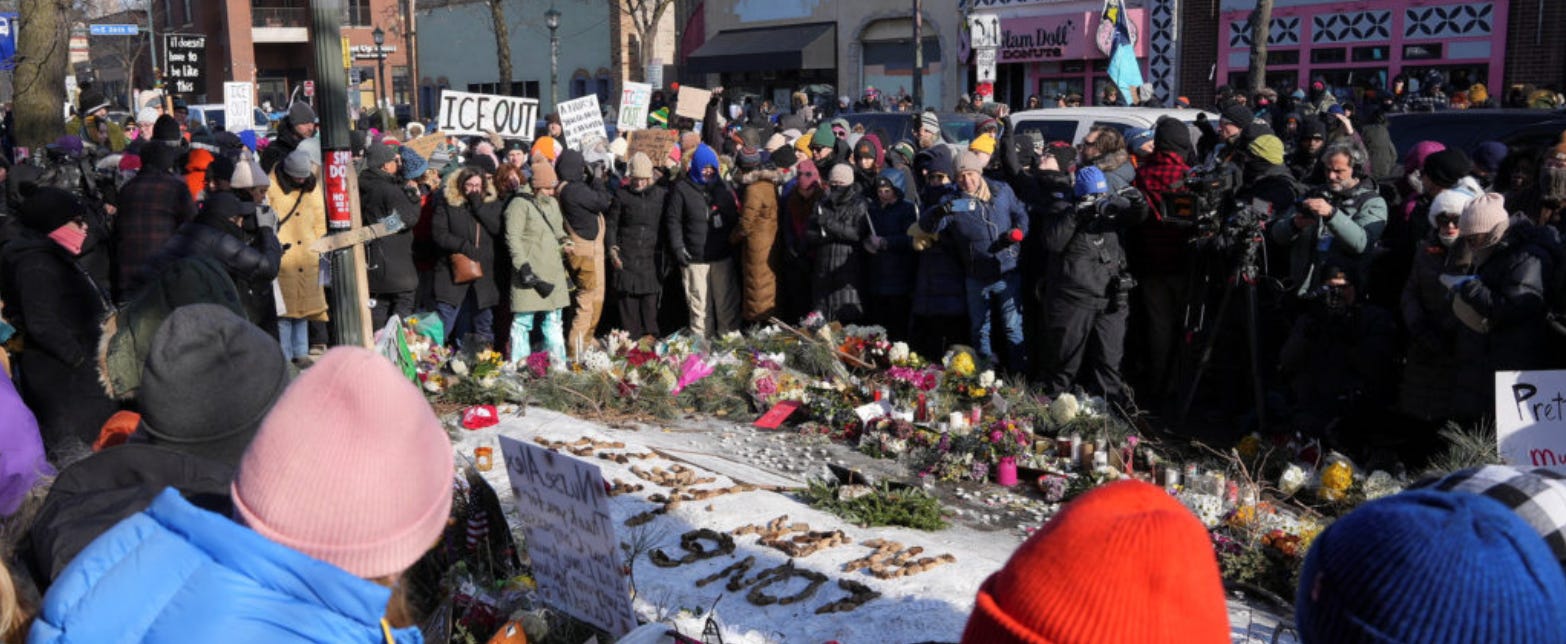
In Minnesota, radically different versions of the truth coexist, regardless of the facts, each reinforced by its own media ecosystem. When it is not your version, it can be genuinely disorienting to see it echoed across traditional outlets and social platforms, and to realize how many people find it credible. The shock is not disagreement. It is the realization that shared reality itself is officially fragmenting.
This is not confusion. It is how misinformation works.
And it is no longer a temporary disruption. It is a permanent condition of the modern information environment.
That distinction matters, because Canada continues to behave as if misinformation is episodic: something that appears, causes harm, and can then be patched. Our laws, policies, and platforms are built for after-the-fact response, not continuous defence.
Canada has no clear or comprehensive legal framework for misinformation. Our laws cover only narrow harms: child exploitation, terrorism, hate speech, and foreign interference. Everything else falls into a wide grey zone, where false or misleading claims can spread freely as long as they do not cross a legal threshold.
Government responses largely treat misinformation as cleanup work. Damage is addressed through education campaigns, media literacy initiatives, and public awareness efforts. The burden is placed on individuals, who are expected to judge credibility for themselves inside an information system engineered for speed, outrage, and volume. Platforms, meanwhile, frame misinformation as a moderation issue: something to label, reduce, or remove only after it is already circulating.
Policy debates tend to treat misinformation as either a national security threat or a free-speech dilemma. Platforms frame it as a balance between safety and engagement. Both miss the core reality.
Misinformation is now a systems failure.
Algorithms determine what people see at scale, with little transparency or accountability. Accuracy competes with virality in ways that users cannot see or evaluate. Speed, volume, emotion wins. Facts arrive later, if it arrives at all.
In a system built for velocity, misinformation does not need to persuade. It only needs to move faster than the truth or facts.
There is no firewall. Government treats misinformation as policy. Platforms treat it as moderation. Neither treats it as infrastructure. There is no upstream protection, no verification layer, and no real-time defence. Only late-stage interventions applied after narratives have already spread.
That is no longer sufficient.
Misinformation is not just harmful content that must be removed. It is unverified information that spreads without friction. Addressing it requires infrastructure, not just takedowns. Accountability, not voluntary codes. Transparency, not black-box algorithms. Verification before virality, not after. Trust signals built into content, not added later as optional labels.
That logic is behind emerging verification infrastructure efforts, including the work we are doing at Get Fact. This is not about policing speech or removing content. It is about verifying claims upstream, at the point of creation, before narratives harden and spread. Linking statements directly to sources. The objective is friction for falsehoods before scale, not damage control afterward.
The urgency is growing. Artificial intelligence has pushed misinformation into a new phase: mass-produced narratives, hyper-targeted influence, convincing deepfakes, synthetic personas, and automated persuasion at scale. The cost of generating false content is collapsing. The cost of verification remains high. That imbalance is the central risk.
The dominant question now is “can I trust anything at all?”
If Canada is serious about protecting elections, markets, and social cohesion, verification must be built in, not bolted on.
Canada needs a real defence against misinformation. If you think that matters, help build it. Share this post. Bring someone who should be part of this conversation.
This is on all of us. We can’t wait for someone else to solve it.
✔️ Use Laura.
✔️ Help build a Canada with facts.🔗 getfact.ca
We apply the best in human and machine intelligence to verify what’s being said online about Canada and its people.
Read more:GetFact.ca
Watch: YouTube
Follow: Facebook | Instagram | TikTok | Bluesky
Listen to GetFact by Kevin Newman (Podcast):
Spotify | Apple Podcasts
Let us know if you see anything worth sharing, Canadians pushing back against attacks, misinformation, or disinformation.
Did we got something wrong? Tell us. It happens. We correct it.
Get Fact, created by our Canadian neighbors, checks statements at their point of creation, before algorithms scale misinformation. Because the objective is to add friction for falsehoods not patch in damage control afterwards. Verification protects information accuracy for our elections, markets and social wellbeing.
That "grey zone" you mentioned is the biggest problem in Ottawa right now. I read the transcripts from the parliamentary committee studying the Canada Elections Act. The officials admitted the law is built to police paid ads. It has almost no power over regular social media posts. That leaves the door wide open for the "mass-produced narratives" you described. We are trying to stop AI speed with paper-era rules.