

Get Fact First, April 15th, 2025
Vol 1, Eps 22

13 Days, 2 Debates, and a Storm of Fakes
Thirteen days remain until the vote—and with two high-stakes election debates set for Wednesday and Thursday, the race is entering its final stretch.
Political parties are ramping up their efforts, flooding airwaves and social media with promises, attacks, and last-minute appeals.
They’re not the only ones in the fight. So are those flooding feeds with fakes and lies—and that’s where we’re focused here.
The Canadian Digital Media Research Network (CDMRN), one of the groups monitoring online misinformation, has flagged a surge in AI-generated images.
These fakes feature familiar faces—CBC News reporters, news pages, news anchors, and Liberal Leader Mark Carney, Conservative Leader Pierre Poilievre, all paired with clickbait headlines:
“Carney’s Major Announcement Shakes Canada!”
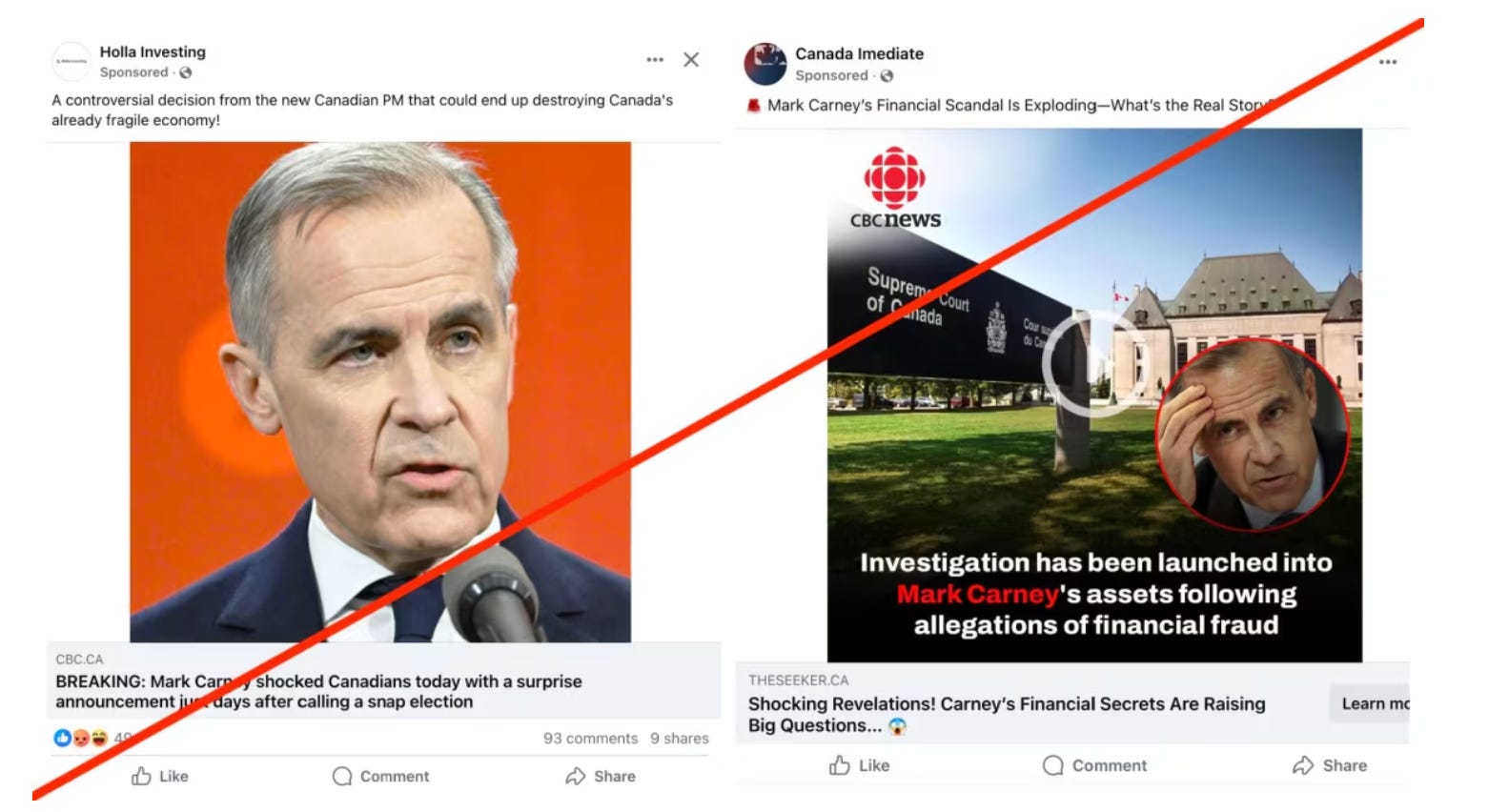
The goal is simple: create doubt.
Poison your trust and judgment. Flood the zone with so much content—real and fake—that it all blurs together.
See enough fakes, will you stop trying to tell the difference.
Is that actually a CBC or CTV News page? The logo looks legit. The photo looks official. You scroll for news, and it flies past—fast and familiar.
The campaigns behind them are often foreign.
Speaking with Get Fact, Taylor Owen pointed to COVID-19 as a clear warning: how fast falsehoods can spread from elsewhere—and how hard they are to reel back in once they’ve taken root.
“We could see the anti-vax content and the false conspiracy theories and the misinformation around vaccines coming into our ecosystem from the US.
The majority of the anti-vax content in Canada came in from America because we're so connected to their ecosystem. And we saw that if you were consuming that information, you were less likely to follow Canadian public health guidance around vaccines.”
From Get Fact by Kevin Newman: Taylor Owen from McGill’s Centre for Media, Tech & Democracy audio here and video below.
Reset Tech—a research group studying technology’s impact on democracy—found that posts about Canadian politics drew nearly two billion views this year.
Nearly half—45%—came from accounts based outside Canada.
The trade war with the U.S. has stirred fresh concerns about disinformation coming from south of the border. There are countries like Russia and India working to shape opinion here, spreading falsehoods to influence our policies—and the leaders we choose.
How do they pull it off?
This time it is different. This wave is powered by deepfakes—fabricated photos, videos, and AI-generated content—amplified by bot networks built to deceive.
Fake accounts, often bought by the thousands, flood platforms to boost false narratives. Some campaigns go further, paying influencers to spread disinformation, gaming algorithms and making lies look like news—because “everyone” is sharing it.
Anyone with a phone can use generative AI to create convincing fakes in seconds.
Nearly 80% of Canadians are on Facebook. The reach is massive.
And remember: in 2023, Meta blocked the sharing of news content in Canada after new federal legislation required tech platforms to pay for journalism.
Since then, election-related content on Facebook has mostly come from third-party sources. Read: anyone.
Thanks to EU transparency rules, you can still see who’s paying for political ads on Facebook. It’s worth a look.
LINK META Ad Library
LINK The CDMRN
LINK Reset Tech
Get Fact by Kevin Newman
Let us know if you see anything worth sharing—Canadians pushing back against attacks, misinformation, or disinformation.
And if we got something wrong? Tell us. It happens. We correct it.
See you Tomorrow
This was really interesting...that last bit about the Kirkland story where it turns out it was possibly a solo actor who activated a bot farm to (perhaps almost randomly) amplify a story was particularly fascinating. How we are all going to basically need hip waders and snorkles to navigate the coming tsunami of AI and otherwise generated and amplified 'news'...