

The Silence Trap. Who Benefits When Engaged People Check Out
What to Do When Total Distrust Is the Most Dangerous Response to AI

A question keeps coming up. Different rooms, different crowds. What should I trust? What do you trust? What are sources of information that are good?
It seems to come from people who grew up mostly trusting the CBC, the Globe, the TV anchor, government. Then they watched the internet hollow out everything that made those institutions reliable.
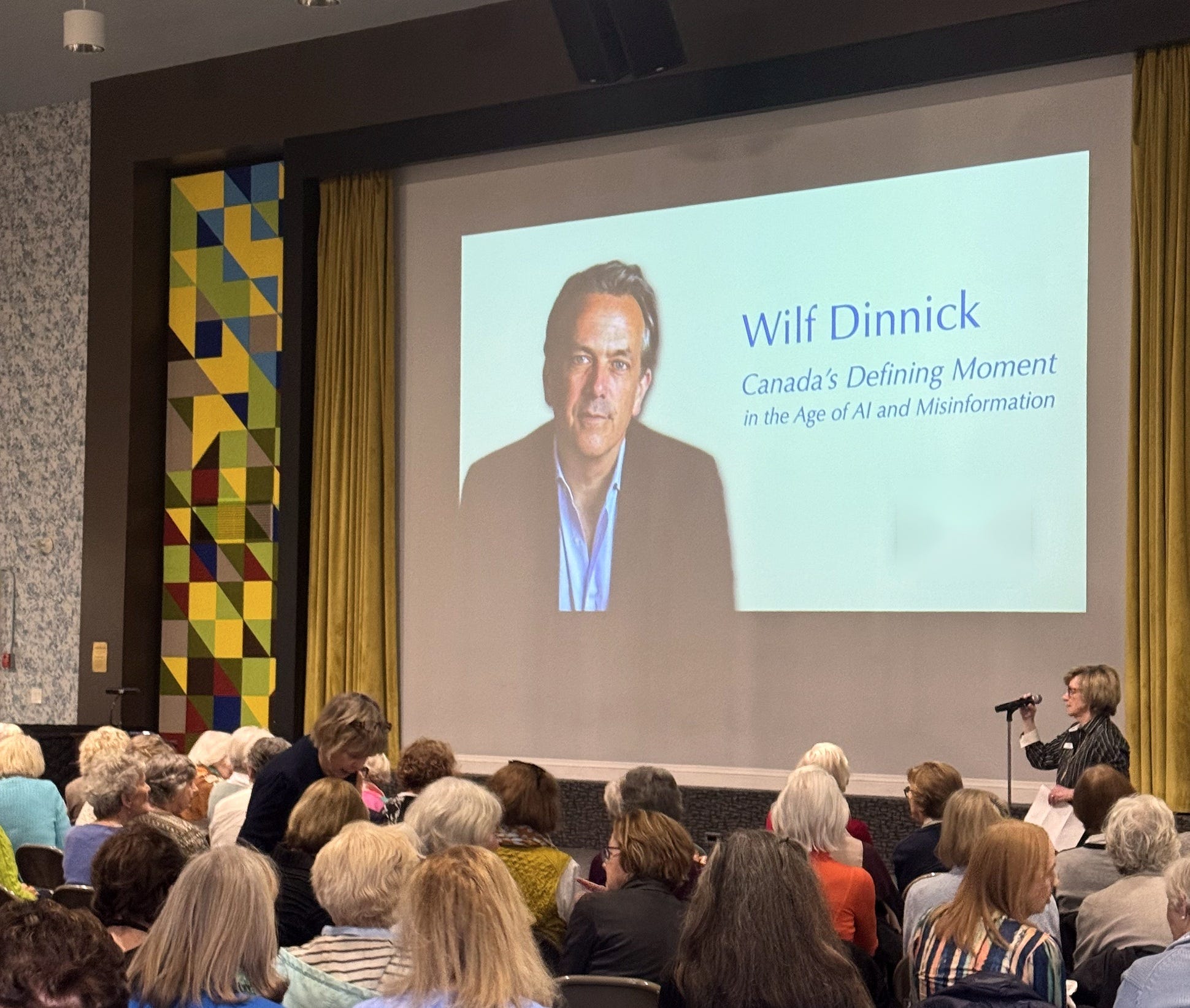
As much of our information now comes from AI and large language models, what people see no longer adds up. They have gone quiet.
The question isn’t who to trust. It’s what to do when trust breaks down.
For a long time, the answer was media literacy. Learn to question, check your sources, and don’t share what you can’t verify. It was good advice for a different era. AI-generated content and bot networks have since made verification itself unreliable. You can follow something all the way back to its apparent source and still not know if that source is real. That appears to be when the paralysis takes hold, and it’s not apathy.
In the late 1990s this was something journalists struggled with when news went online. When is it the responsibility of reporters or news outlets to call out fake news or something false spreading online that was clearly damaging?
Call it the silence trap. If you don’t trust anything, you can’t be fooled.
This position mimics critical thinking. Total skepticism feels like the opposite of gullibility. It isn’t. It’s the same thing with better self-image. One group shares the wrong thing. The other shares nothing. At scale, the platforms and bad actors benefit equally from both.
In Canada, this is not abstract. It’s a civic emergency.
The generations that were most likely to sit on school boards, knock on doors, show up at town halls, and vote in municipal elections appear to be opting out. Not because they were manipulated into a false belief, but because they’ve been quietly convinced that opting out is the mature response to a broken system.
It can’t be.
Bad actors, and broken systems, including some governments, don’t just spread disinformation. They flood the zone so people stop believing anything at all. We don’t have to look far to see what happens when the people who should be loudest go quiet, and who fills that silence.
So what actually works?
Treat “I don’t trust anything” as a starting point, not a final answer. The next question isn’t “who told you that.” It’s “what would I need to check?”
It is easy to pick one claim from your feed and follow it back. Housing numbers, immigration statistics, crime rates. Yes, documents get spun, timed for political effect, stripped of context. But there’s a difference between knowing what something actually says and getting it after three people have had a go at it.
When something triggers outrage, relief, or satisfaction, that’s often a signal to check.
When researchers studied how professional and effective fact-checkers evaluate sources online, they found that the best fact-checkers don’t read an article carefully to decide if it’s trustworthy. They leave it immediately and open new tabs to see what other sources say about it. Historians and students who sat with a source and read it deeply could be easily deceived. The fact-checkers who moved quickly and checked elsewhere were not. Slow and careful lost. Fast and lateral won. [Link]
Someone once told me, in any meeting, watch for the quiet ones. Not the loudest voice. The person holding back is often sitting on something worth hearing.
The people holding something worth saying need to say it. The silence isn’t neutral anymore.
Visit Asklaura.ai
Let us know if you see anything worth sharing, pushing back against attacks, misinformation, or disinformation.
Did we got something wrong? It happens. We correct it.
Hello@asklaura.ai